Timing Belt Symptoms: 6 Warning Signs Your Belt Is Failing
When symptoms do appear, they cluster into six observable patterns. Each has a severity rating, a likely root cause, an action, and an OBD-II code reference where applicable. Use this as a triage tool when something feels wrong, but the safest defence is replacing on the manufacturer schedule.
See service interval by manufacturer for the schedule, and broken timing belt cost for what to do if the belt has already snapped.
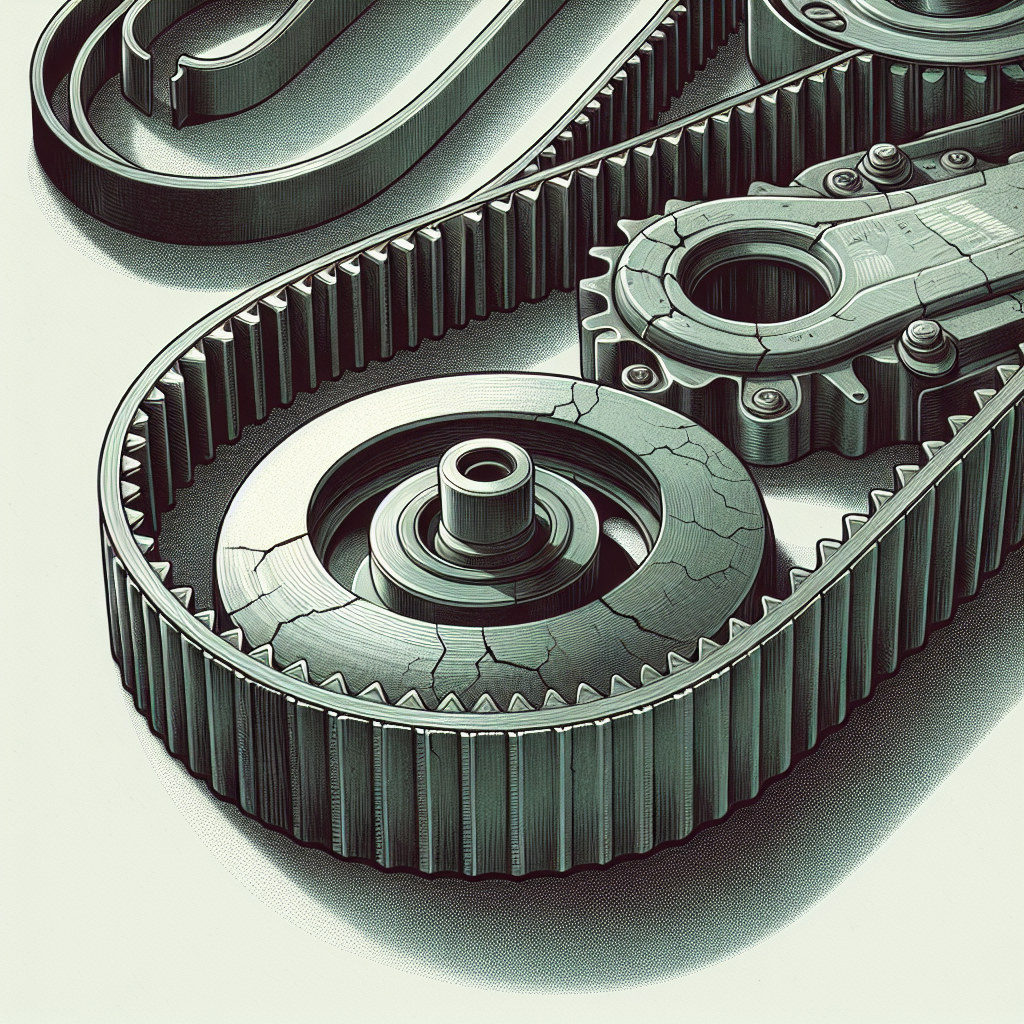
New belt (top) vs worn belt with cracked teeth (bottom)
The six symptoms
Ticking or chattering from the front of the engine
Tensioner spring weakening, belt teeth wearing, or a failing idler pulley bearing.
Diagnose within 1 week. Replace belt + tensioner + idler pulleys if confirmed. Don't ignore on an interference engine.
Catch early: $400-$1,800 (normal belt job). Ignore: $2,070-$5,040 (bent-valve repair after a broken belt on interference).
Sometimes paired with P0335/P0340 (crank/cam sensor signal issues).
Oil leak at the front of the engine
Front crankshaft seal or camshaft seal leaking onto the belt. Oil softens rubber and accelerates degradation.
Fix the seal AND replace the belt. An oil-soaked belt has 30-50% less life regardless of mileage. Usually done at the same time, the seal lives behind the cover.
$500-$2,000 (seal + belt + tensioner + pump). Ignore: belt life cut short, fails before next scheduled replacement.
None usually associated.
Engine misfires
Belt may have skipped a tooth. Cam-crank timing is now off. Valve timing is wrong. On an interference engine, the engine is one bad bump from valve-piston contact.
Stop driving. Tow to a shop for diagnosis. If interference engine, do not let the engine run, sustained off-timing operation will damage valves.
Catch early: $400-$1,800. Ignore + interference + sustained driving: $2,070-$5,040 in bent-valve repair, more if the pistons went too.
P0300 (random misfire), P030X (cylinder-specific), often paired with P0011/P0014/P0016/P0017.
Rough idle
Same root cause as misfires, often a precursor symptom. Belt skip is sub-clinical at idle but the timing is no longer perfectly correct.
Schedule diagnosis within the week. If car has aged past 80% of the belt's interval, just replace; don't pay for separate diagnostic time.
Catch early: normal belt job. Ignore: progresses to misfires, then to outright belt failure.
Often paired with P0011/P0014.
Engine cranks but doesn't start
Belt has snapped or skipped multiple teeth. Cam isn't turning. Engine has no compression. On an interference engine, valves and pistons may already be in contact.
Stop cranking. Each crank attempt drives the piston into open valves. Tow to shop. See broken-belt cost page.
Non-interference: $500-$1,500. Interference: $3,000-$9,000+ depending on severity.
P0335/P0340 confirmed cam-crank correlation lost.
Visible cracks, glazing, or missing teeth on the belt
End-of-life rubber. The belt is past its useful service window even if it hasn't been on the car for 100,000 miles, age and oil contamination matter as much as mileage.
Replace immediately. Don't wait for the next symptom; the next symptom is failure.
$400-$1,800 (normal belt job).
None.
What causes premature belt failure
- • Oil contamination. Front seal leak. The single most common premature-failure cause. Oil soaks into the belt and degrades the rubber.
- • Heat extremes. Phoenix summers, sustained high-RPM towing, exhaust heat soak.
- • Tensioner wear. A weak spring or seizing pulley puts uneven load on the belt teeth. Replace tensioner with the belt; don't reuse.
- • Wrong belt for the engine. Cheap aftermarket belts that don't match the OEM tooth profile. Stick with Gates, Continental, ContiTech, Aisin, Dayco.
- • Age alone. The rubber matrix breaks down even on garage queens. The 7-10 year recommendation exists for a reason.
What this isn't
If you hear a squeal from the front of the engine, that's almost certainly the serpentine belt, not the timing belt. The timing belt sits behind a cover and you can't hear it directly under normal driving.
Squealing serpentine belt is cheap to fix, $100-$250 in most cases. See serpentinebeltreplacementcost.com.
A rattling on cold start that quietens after a few seconds is more likely a timing chain (stretched, loose) than a belt. Belts don't rattle, they tick or chatter, and only if the tensioner is failing.
OBD-II code reference
Codes that should trigger a timing-belt-system inspection. Not every code below means the belt itself is the problem, but each implicates the cam-crank timing relationship the belt controls.
Camshaft Position Timing Over-Advanced (Bank 1)
Cam timing not where ECU expects. Belt skip, VVT issue, or sensor fault.
Exhaust Camshaft Timing Over-Advanced (Bank 1)
Same as P0011 for the exhaust cam side.
Crankshaft / Camshaft Correlation (Bank 1)
Cam and crank are out of expected phase. Common after a belt skip.
Crankshaft / Exhaust Cam Correlation (Bank 1)
Same as P0016 for the exhaust cam.
Crankshaft Position Sensor 'A' Circuit
Often a bad sensor, but also fires after belt failure when the cam stops turning.
Camshaft Position Sensor 'A' Circuit
Cam sensor signal issue. Worth checking the belt before replacing the sensor blindly.
Random / Multiple Cylinder Misfire
If paired with cam-correlation codes, points at belt skip rather than ignition.
Frequently asked
Can a timing belt break without warning?+
Yes, often. Timing belts can fail with no audible warning, especially on well-maintained engines where the tensioner is in good shape and there's no oil contamination. The schedule exists because the failure mode is sudden, the rubber matrix can lose tooth-shear strength faster than it loses any audible cue.
Symptoms (ticking, rough idle, oil leaks at the front) are useful when present, but absence of symptoms doesn't mean the belt is healthy. Replace on the manufacturer interval; don't wait for warning signs that may never come. See service interval →
How can I tell if my timing belt is going bad?+
Six observable symptoms detailed in the section above. Severity varies. A ticking belt is medium-high concern, schedule the appointment within a week. A no-start with cranking is critical, stop cranking and tow.
OBD-II codes that point at timing-belt issues include P0011/P0014 (cam timing), P0016/P0017 (cam-crank correlation), and P0335/P0340 (sensor signal mismatched). If a code reader returns one of these, treat it as a timing-belt-system inspection trigger.
Is a squealing belt a timing belt symptom?+
No. Squealing from the front of the engine is almost always the serpentine (drive) belt, not the timing belt. The timing belt sits behind a sealed plastic cover and you can't hear it directly under normal driving.
A squeal usually means the serpentine belt is glazed, loose, or has a worn pulley. Cheap fix, $100-$250. See serpentinebeltreplacementcost.com for the serpentine-belt diagnosis.